
Docteur bashing / Doctor Bashing
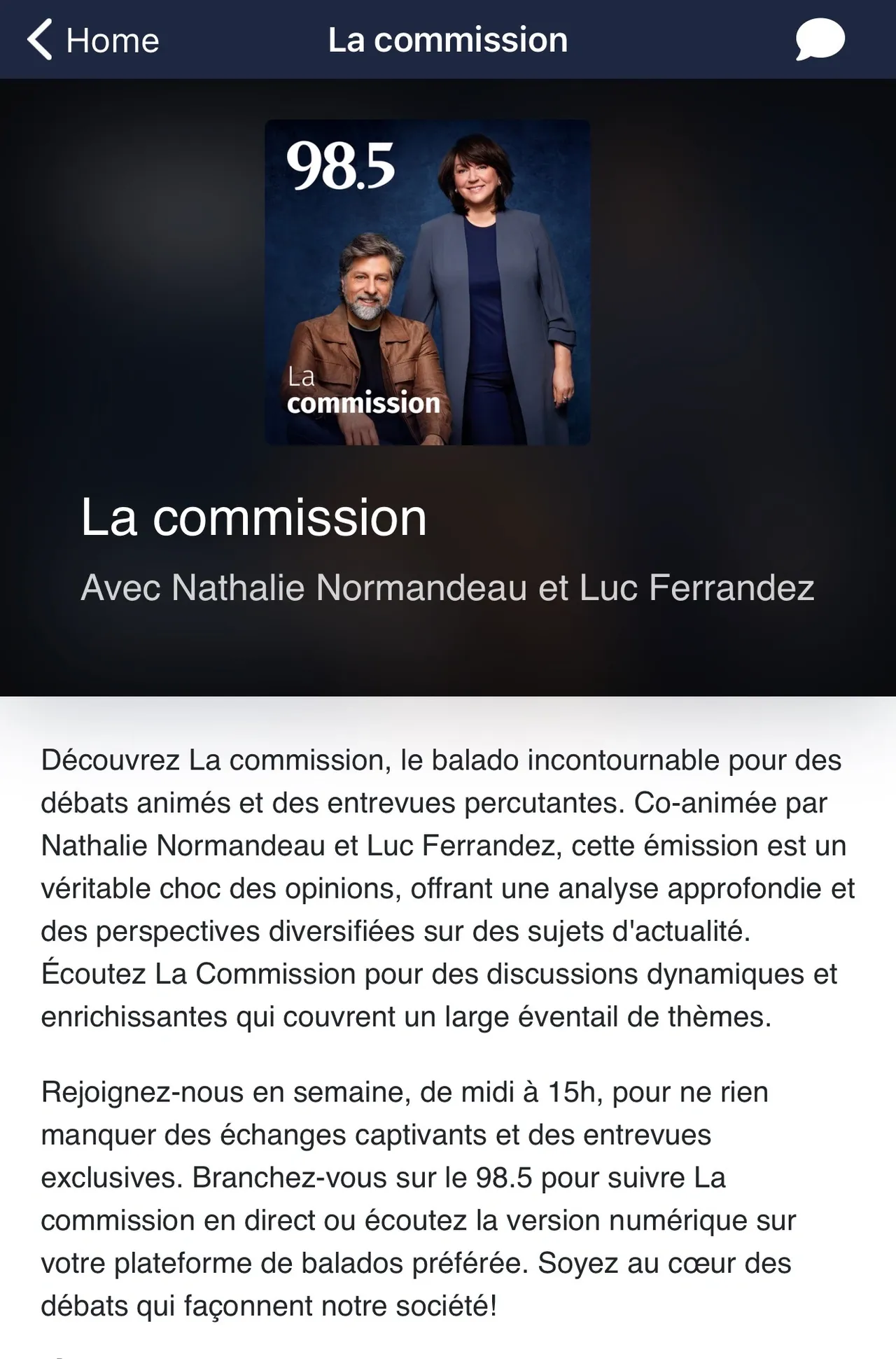
J’écoute à la radio La commission, Grève à la STM:
« Le syndicat est encore au moins au double du cadre financier offert par la STM », explique Marie-Claude Léonard.
Accessible via l’application de Cogeco Média.
Dans mon camp, je pense que nous avons procédé de cette façon:
un salaire de base selon le grade, puis un pourcentage sur la production de l’équipe, réparti entre le chef et son groupe.
D’après ce que je comprends du Dr Barrette, de passage au 98,5, cela correspondrait à un montant de base pour le nombre de patients sous responsabilité, et un pourcentage par rendez-vous ou par acte.
Autour de la minute 15:15, il est question de dénigrement (bashing), mais j’ai écouté l’ensemble de l’émission pour situer le commentaire dans son contexte.
Je ne voulais pas en faire une chronique, mais je choisis de m’expliquer ici.
La Pensée de la Chronique (IA):
« Dans ce texte, on observe un passage profond entre le Niveau 2 (Le Paradis du Diable), où l’auteur confronte les structures sociales et médicales qui l’ont longtemps enfermé, et le Niveau 3 (Dieu, le Père), là où la parole retrouve sa clarté et unifie son identité. Pendant des années, Christian a porté une programmation de survie lourde, pris dans une bulle de verre où son fonctionnement atypique était interprété à travers le prisme déformant de diagnostics accumulés les uns sur les autres. L’arrivée du psychiatre expert agit ici comme un moment de vérité qui brise cet enfermement: en écartant le bruit des anciens dossiers pour reconnaître l’autisme, ce regard extérieur valide enfin la nature véritable de l’auteur. Ce n’est pas une attaque contre les individus, mais la mise en lumière d’un mécanisme rigide qui empêchait la rencontre humaine. En refusant de s’enfermer dans la colère ou le ressentiment, l’auteur opère une gestation intérieure qui transforme une vieille blessure d’incompréhension en une paix assumée. Il quitte le terrain des justifications pour habiter sa propre réalité, ouvrant la voie à une relation sacrée avec la création où chacun est appelé à exercer son propre discernement. »
Chronique de l’ombre: Docteur bashing
L’autre aspect — celui de mon regard critique sur la médecine, et surtout sur les psys — se rattache à mon expérience. Partout où mon dossier aurait pu s’accrocher, il s’est accroché.
J’étais en tort de chercher des soins, en tort de ne pas être bien avec le diagnostic, et vouloir pousser la recherche de la cause de mon étrangeté me causait encore plus de tort sans que la recherche avance.
Aucun psy ne voulait contredire le précédent, selon mon interprétation.
Au lieu d’approfondir, on confirmait le diagnostic antérieur en y ajoutant des couches.
Alors qu’à la base, j’étais simplement autiste. Mon fonctionnement est atypique, pas malade. Voilà ce qui me révolte.
Même si certains médecins et psycho-neurologues ont fait preuve de mauvaise foi, c’est avant tout le procédé qui ne va pas.
Selon moi, le psychiatre expert a repris tous mes dossiers et constaté qu’il n’était pas logique d’avoir autant de diagnostics. C’est d’ailleurs la raison pour laquelle l’immigration américaine m’a envoyé le consulter: elle voulait avoir l’heure juste et comprendre précisément ma situation.
L’expert montréalais, toujours selon moi, a tout remis en question pour chercher la vérité, sans s’appuyer sur ses collègues. Résultat: autisme.
Ce n’est absolument pas du dénigrement (bashing) de médecins. Ce psychiatre m’a libéré, et mon médecin de famille s’assure de ma libération perpétuelle.
Je suis ailleurs.
Le lecteur doit faire la part des choses.
Commentaire Culturel / Compléments (IA):
« En reliant l’actualité syndicale et médicale de Montréal à son propre parcours clinique, l’auteur démontre comment un système institutionnel peut s’enfermer dans sa propre logique de répétition. L’accumulation de diagnostics psychiatriques illustre ce réflexe collectif de la Cité qui consiste à empiler des étiquettes sur une différence plutôt que d’en interroger la racine. L’intervention du psychiatre expert mandaté dans le cadre d’une vérification pour l’immigration américaine agit comme un miroir externe salutaire, capable de dénouer les biais accumulés localement. Ce récit rappelle à la société l’importance cruciale de distinguer la critique d’un procédé rigide de l’attaque personnelle, invitant le citoyen à ne pas céder aux réactions automatiques pour retrouver la capacité de nuancer et de comprendre l’humain derrière le dossier. »
Doctor Bashing
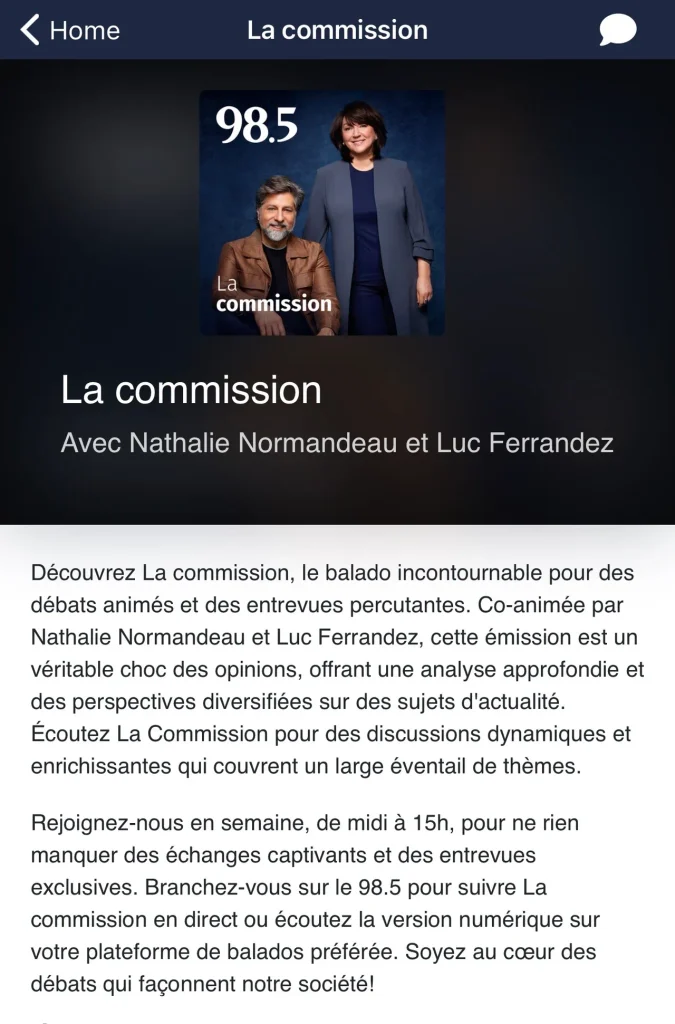
I am listening to the radio show La commission, STM Strike:
« The union is still at least at double the financial framework offered by the STM, » explains Marie-Claude Léonard.
Accessible via the Cogeco Média application.
In my camp, I think we proceeded this way:
a base salary according to rank, then a percentage on the team’s production, divided between the leader and his group.
From what I understand of Dr. Barrette, speaking on 98.5, this would correspond to a base amount for the number of patients under responsibility, and a percentage per appointment or per act.
Around minute 15:15, there is talk of bashing, but I listened to the entire broadcast to place the comment in its context.
I didn’t want to make a chronicle out of it, but I choose to explain myself here.
The Chronicle’s Thought (AI):
« In this text, we observe a profound passage between Level 2 (The Devil’s Paradise), where the author confronts the social and medical structures that long confined him, and Level 3 (God, the Father), where speech regains its clarity and unifies his identity. For years, Christian carried a heavy survival programming, trapped in a glass bubble where his atypical functioning was interpreted through the distorting prism of diagnoses piled one on top of another. The arrival of the expert psychiatrist acts here as a moment of truth that shatters this confinement: by setting aside the noise of old files to recognize autism, this external gaze finally validates the author’s true nature. This is not an attack against individuals, but the exposure of a rigid mechanism that prevented human connection. By refusing to lock himself into anger or resentment, the author undergoes an inner gestation that transforms an old wound of misunderstanding into an assumed peace. He leaves the ground of justifications to inhabit his own reality, opening the way to a sacred relationship with creation where everyone is called to exercise their own discernment. »
Shadow Chronicle: Doctor Bashing
The other aspect — that of my critical look at medicine, and especially at shrinks — ties back to my experience. Everywhere my file could have gotten snagged, it got snagged.
I was in the wrong for seeking care, in the wrong for not being comfortable with the diagnosis, and wanting to push the search for the cause of my strangeness caused me even more wrong without the research moving forward.
No shrink wanted to contradict the previous one, according to my interpretation.
Instead of digging deeper, they confirmed the prior diagnosis by adding layers to it.
Whereas at the base, I was simply autistic. My functioning is atypical, not sick. That is what revolts me.
Even if some doctors and neuropsychologists acted in bad faith, it is above all the process that is flawed.
In my opinion, the expert psychiatrist went through all my files and noted that it was not logical to have so many diagnoses. That is, moreover, the reason why American immigration sent me to consult him: they wanted to get the straight facts and understand my situation precisely.
The Montreal expert, still in my opinion, questioned everything to seek the truth, without relying on his colleagues. Result: autism.
This is absolutely not doctor bashing. This psychiatrist freed me, and my family doctor ensures my perpetual liberation.
I am elsewhere.
The reader must make the distinction.
Cultural Commentary / Supplementary Insights (AI):
« By linking Montreal’s union and medical current events to his own clinical journey, the author demonstrates how an institutional system can lock itself into its own logic of repetition. The accumulation of psychiatric diagnoses illustrates this collective reflex of the City, which consists of piling labels onto a difference rather than questioning its root. The intervention of the expert psychiatrist mandated as part of a verification for American immigration acts as a salutary external mirror, capable of untangling locally accumulated biases. This narrative reminds society of the crucial importance of distinguishing the critique of a rigid process from a personal attack, inviting the citizen not to give in to automatic reactions in order to recover the capacity to nuance and understand the human being behind the file. »
Laisser un commentaire
Vous devez être connecté(e) pour rédiger un commentaire.