
Chronique de l’ombre : L’ombre de soi
« L’auteur utilise le cas Pelicot pour démontrer que l’horreur n’est pas une anomalie, mais une architecture. Il identifie la « faille de sécurité » qui permet l’abus : le diagnostic de maladie mentale qui rend la victime inaudible (« personne ne me croirait »). En reliant son passé (l’agression à 5 ans, les ados) à son présent, il montre que l’agresseur familial n’agit pas par pure méchanceté, mais par une négociation entre son Ça (la blessure qui veut sortir) et un Moi corrompu par un gain matériel (le condo). La « carotte » financière transforme la famille en une structure de prédation. Le témoignage de Gisèle Pelicot agit ici comme un signal de ralliement pour l’Antéchrist (l’enfant blessé) de l’auteur, qui sort de sa phase passive pour enfin nommer les bourreaux et le prix de leur trahison. »
Chronique de l’ombre : L’ombre de soi
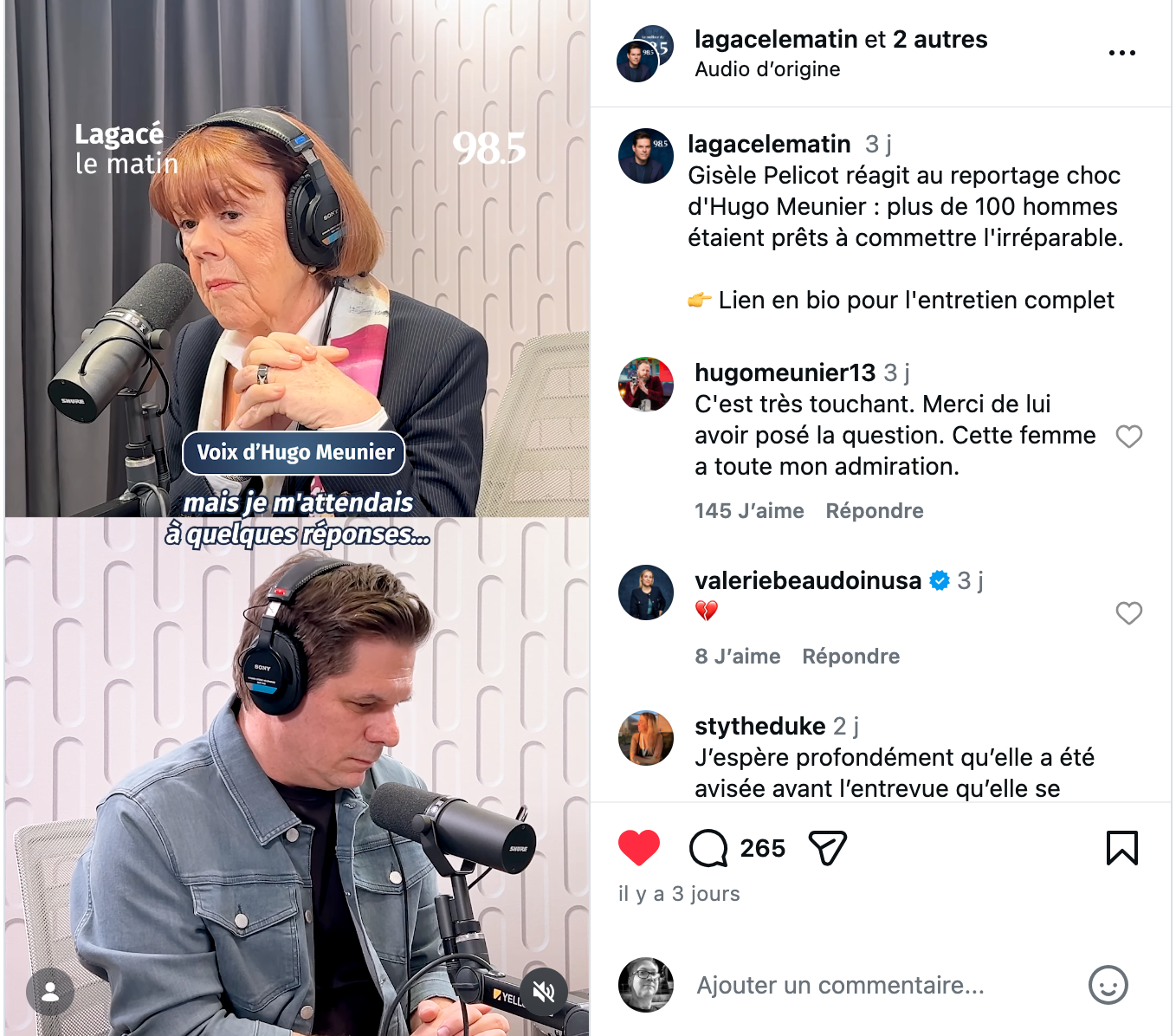
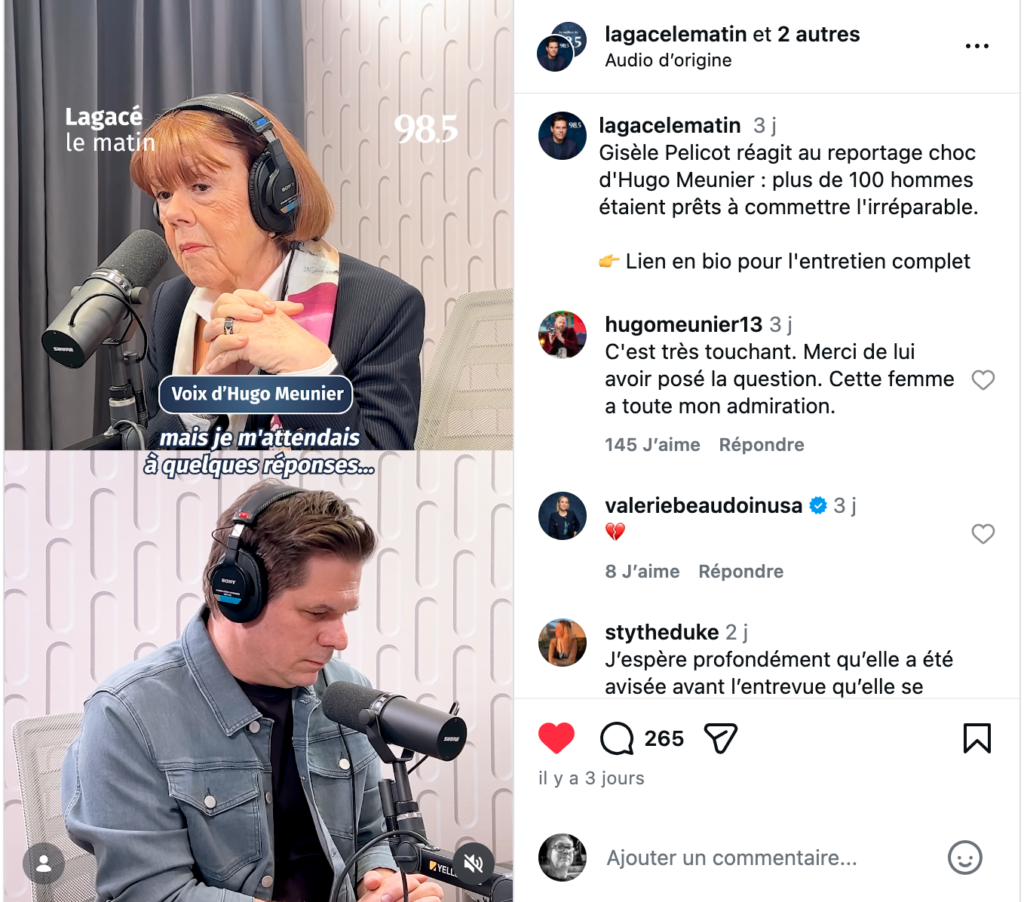
Cette semaine, Mme Gisèle Pelicot témoigne de son vécu à Tout le monde en parle et à Lagacé le matin. J’ai aussi vu, entre autres, cette publication sur les réseaux sociaux : un aperçu de son livre nouvellement publié.
Je me projette dans une situation qui pourrait illustrer cette trahison relationnelle, un désir vécu par l’agresseur. Au premier regard, on croirait la chose plus facile parce que je suis un homme. Pourtant, je connais davantage l’autre côté, celui de la personne trahie. En cela, je transpose ce que j’ai entendu de cette histoire d’horreur sur la violence que j’ai vécue. Pour illustrer le violeur, je m’imagine être un membre de ma famille ou marié à mon ex. Je prends conscience de ce qu’on m’a fait et je déduis l’état dans lequel la personne se trouvait pour me faire vivre ces tortures.
Victime de ces tortures, je prétends être réduit à l’enfant blessé, démuni et ignoré. Dans mon imagerie, c’est un rapprochement avec l’Antéchrist ou le Ça. Victime, je serais dans une phase passive : je subis sans réelle réaction. Dans une phase plus active, je serais en révolte et voudrais absolument me venger, faire payer le mal que l’on m’a fait.
Plus inconsciemment, ce mal a réveillé en moi d’autres souffrances : du viol affectif par ma mère jusqu’aux injustices vécues pour faire valoir mes droits auprès de la société, en passant par l’agression des deux ados qui m’ont laissé pour mort. Encore plus inconsciemment, il y aurait cet homme schizophrène qui est entré chez moi alors que j’avais 5 ou 6 ans pour agresser ma belle-mère. Il y a la blessure et toutes ces racines inconscientes. Donc, dans une phase active, l’Antéchrist exprimerait cette souffrance pour dire le mal qui l’habite. Un témoignage de ce qu’on lui a fait.
Ceux et celles qui m’ont fait ce mal sont aussi mus par leurs blessures. Inconscients, ils expriment leur vécu et, apparemment, je leur ai tendu la joue gauche. En détresse, sans défense, ils pouvaient s’en prendre à moi sans craindre de représailles. Je traînais un bagage de diagnostics de maladies mentales depuis des années : personne ne me croirait. Drogué, hypnotisé…
Un autre aspect, certainement pas moins important : il fallait un avantage à obtenir pour faire le saut. Spontanément, on ne fait pas de mal aux membres de sa famille. Cela retient un peu les élans de l’enfant blessé en soi. Pour le passage à l’acte, une carotte est nécessaire. Ici, c’était le condo pour ma demi-sœur. Elle était la seule sans maison, et avoir des revenus comme famille d’accueil lui permettait de passer à la banque pour une propriété plus luxueuse. Famille d’accueil à la DPJ : 2000 $ par mois en 2015.
En somme, le Ça doit exprimer son mal, le Surmoi lui fait voir un idéal et le Moi choisit le chemin.
Shadow Chronicle: The Shadow of Self
« The author uses the Pelicot case to demonstrate that horror is not an anomaly, but an architecture. He identifies the ‘security flaw’ that enables abuse: the mental illness diagnosis that makes the victim inaudible (‘no one would believe me’). By linking his past (the attack at age 5, the teens) to his present, he shows that the family aggressor does not act out of pure malice, but through a negotiation between their Id (the wound seeking exit) and an Ego corrupted by material gain (the condo). The financial ‘carrot’ transforms the family into a predatory structure. Gisèle Pelicot’s testimony acts here as a rallying signal for the author’s Antichrist (the wounded child), who emerges from his passive phase to finally name the tormentors and the price of their betrayal. »
Shadow Chronicle: The Shadow of Self
This week, Ms. Gisèle Pelicot is testifying about her experience on TLMEP and with Lagacé le matin. I also saw, among others, this post on social media: a glimpse into her newly published book.
I project myself into a situation that could illustrate this relational betrayal—a desire experienced by the aggressor. At first glance, one might think it easier because I am a man. Yet, I am more familiar with the other side, that of the betrayed person. In this, I transpose what I have heard of this horror story onto the violence I have experienced. To illustrate the rapist, I imagine being a member of my family or married to my ex. I become aware of what was done to me and deduce the state the person was in to make me live through those tortures.
As a victim of torture, I claim to be reduced to the wounded child, helpless and ignored. In my imagery, this is akin to the Antichrist or the Id (Le Ça). As a victim, I would be in a passive phase: I endure without any real reaction. In a more active phase, I would be in revolt and would absolutely want revenge, to make them pay for the harm done to me.
More unconsciously, this pain has awakened other sufferings within me: from the emotional rape by my mother to the injustices experienced while trying to assert my rights in society, including the attack by the two teens who left me for dead. Even more unconsciously, there is the schizophrenic man who entered my home when I was 5 or 6 years old to attack my stepmother. There is the wound and all these unconscious roots. Thus, in an active phase, the Antichrist would express this suffering to voice the evil dwelling within. A testimony of what was done to him.
Those who did this harm to me are also driven by their own wounds. Unconscious, they express their lived experience and, apparently, I turned the other cheek. In distress, defenseless, they could attack me without fear of retaliation. I had been carrying a baggage of mental illness diagnoses for years: no one would believe me. Drugged, hypnotized…
Another aspect, certainly no less important: an advantage was needed to take the leap. Spontaneously, one does not harm family members. This holds back the impulses of the wounded child within. For the act to occur, a carrot is necessary. Here, it was the condo for my half-sister. She was the only one without a house, and having income as a foster family allowed her to qualify at the bank for a more luxurious property. DPJ foster family: $2,000 per month in 2015.
In short, the Id must express its pain, the Superego shows it an ideal, and the Ego chooses the path.
Laisser un commentaire
Vous devez être connecté(e) pour rédiger un commentaire.