
Chronique de l’ombre : Méchant contraste
« Cette chronique met en lumière le paradoxe entre la réussite structurelle (la reconnaissance officielle du blogue par un ISSN) et la douleur intime de la séparation familiale. En analysant le film Les Voisins, l’auteur utilise sa perspective d’autiste assumé pour décoder l’évolution des codes sociaux québécois. Il dénonce le «méchant contraste» d’une époque où l’humour servait souvent à l’autodénigrement collectif, présentant le Québécois comme un «imbécile». Pour lui, la «beauté» des accomplissements professionnels reste vaine face à l’absence de sa fille, rappelant que la structure la plus solide ne remplace jamais le lien humain fondamental. »
Chronique de l’ombre : Méchant contraste
Avant-hier, je vois une publication suggérant de regarder gratuitement sur YouTube le film Les Voisins.
En contraste avec de belles émotions, je repense avec beaucoup de tristesse à ma fille qui me manque tant. Mon blogue devient un journal qui lui-même obtient un numéro d’ISSN. Surprenant ? Plein de gratitude, bien sûr, tout en me rappelant que ma maison d’édition a déjà quelques numéros ISBN. Une surprise en continuité avec mon passé. Je refais mes demandes pour être reconnu journaliste. Un autre paradoxe. Finalement, j’ai écrit un article qui explique ma méthode originale. Toute cette beauté me ramène à une sorte de mort : qu’est-ce qui importe pour vrai ? C’est là que je suis rempli de tristesse par rapport à ma fille.
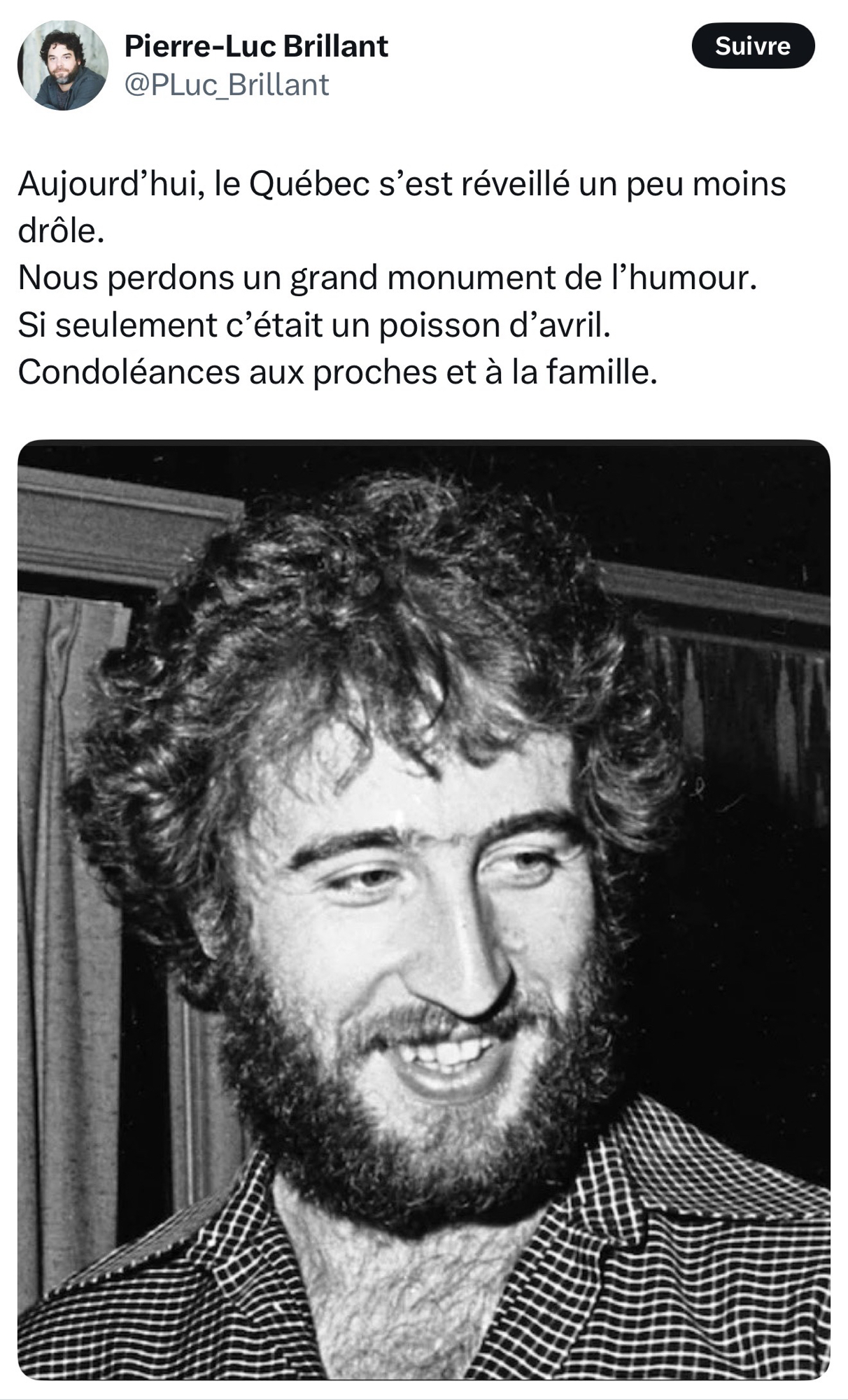
Bref, j’écoute ce film auquel Louis Saia a participé. La raison de la suggestion. Un comique qui décède implique de regarder des comédies à sa mort. J’ai bien rigolé. Ça me rappelait aussi un passé et faisait ressortir mes difficultés de socialisation. Le film est une caricature tout en conservant une certaine réalité.
D’un côté, je projetais mon handicap social qu’est mon autisme sur ces communications satiriques. Je voyais à quel point notre société a changé en 40 ans. Un constat fait durant l’écoute de cette production.
D’un autre côté, je regardais la satire du point de vue extérieur du peuple québécois. Extraterrestre, j’apprends à connaître le Québécois francophone à travers ce film. Je déduis qu’il s’agit d’un imbécile et que la Québécoise francophone est en-dessous de lui. Ce n’est pas peu dire. Méchant contraste. Le rire et le dénigrement.
Toutes mes sympathies à ses proches.
Chronicle of the Shadow: Wicked Contrast
« This chronicle highlights the paradox between structural success (the official recognition of the blog via an ISSN) and the intimate pain of family separation. By analyzing the film Les Voisins, the author uses his perspective as an assertive autistic person to decode the evolution of Quebec’s social codes. He denounces the ‘wicked contrast’ of an era where humor often served collective self-deprecation, portraying the Quebecer as a ‘fool.’ For him, the ‘beauty’ of professional achievements remains hollow in the face of his daughter’s absence, reminding us that the strongest structure can never replace the fundamental human bond. »
Chronicle of the Shadow: Wicked Contrast
The day before yesterday, I saw a post suggesting to watch the movie Les Voisins (The Neighbors) for free on YouTube.
In contrast to beautiful emotions, I think back with great sadness to my daughter, whom I miss so much. My blog is becoming a journal that itself is obtaining an ISSN number. Surprising? Full of gratitude, of course, while reminding myself that my publishing house already has several ISBN numbers. A surprise in continuity with my past. I am reapplying to be recognized as a journalist. Another paradox. Finally, I wrote an article explaining my original method. All this beauty brings me back to a kind of death: what truly matters? That is where I am filled with sadness regarding my daughter.
In short, I watched this film in which Louis Saia participated. The reason for the suggestion. When a comedian passes away, it involves watching comedies upon their death. I had a good laugh. It also reminded me of a past and brought out my socialization difficulties. The film is a caricature while still maintaining a certain reality.
On one hand, I projected my social handicap—my autism—onto these satirical communications. I saw how much our society has changed in 40 years. A realization made while listening to this production.
On the other hand, I looked at the satire from the external perspective of the Quebec people. Like an alien, I am getting to know the French-speaking Quebecer through this film. I deduce that he is a fool and that the French-speaking Quebec woman is beneath him. That’s saying a lot. Wicked contrast. Laughter and disparagement.
All my sympathies to his loved ones.