
Chronique du voyage intérieur: Qui es-Tu?
« Dans cette chronique issue du Journal L’Extraterrestre, l’auteur déconstruit l’usage superficiel du « Je » pour explorer la mécanique profonde de l’identité et de la relation. Le titre « Qui es-Tu ? » interpelle l’essence même de l’interlocuteur au-delà de ses masques. L’auteur postule que l’intimité n’est pas une variable sociale, mais un fondement spirituel invariant qui s’applique uniformément à toutes ses interactions. Sa thèse souligne un paradoxe fascinant : ce qui est perçu comme une « inconstance » chez la personne autiste est, en réalité, le reflet de la fragmentation de l’autre. En refusant le cloisonnement social, l’auteur devient un miroir involontaire qui révèle les projections et les jugements de son vis-à-vis. C’est un appel à une lucidité relationnelle où la rencontre humaine devient un pont véritable entre deux réalités. »
Chronique du voyage intérieur: Qui es-Tu?
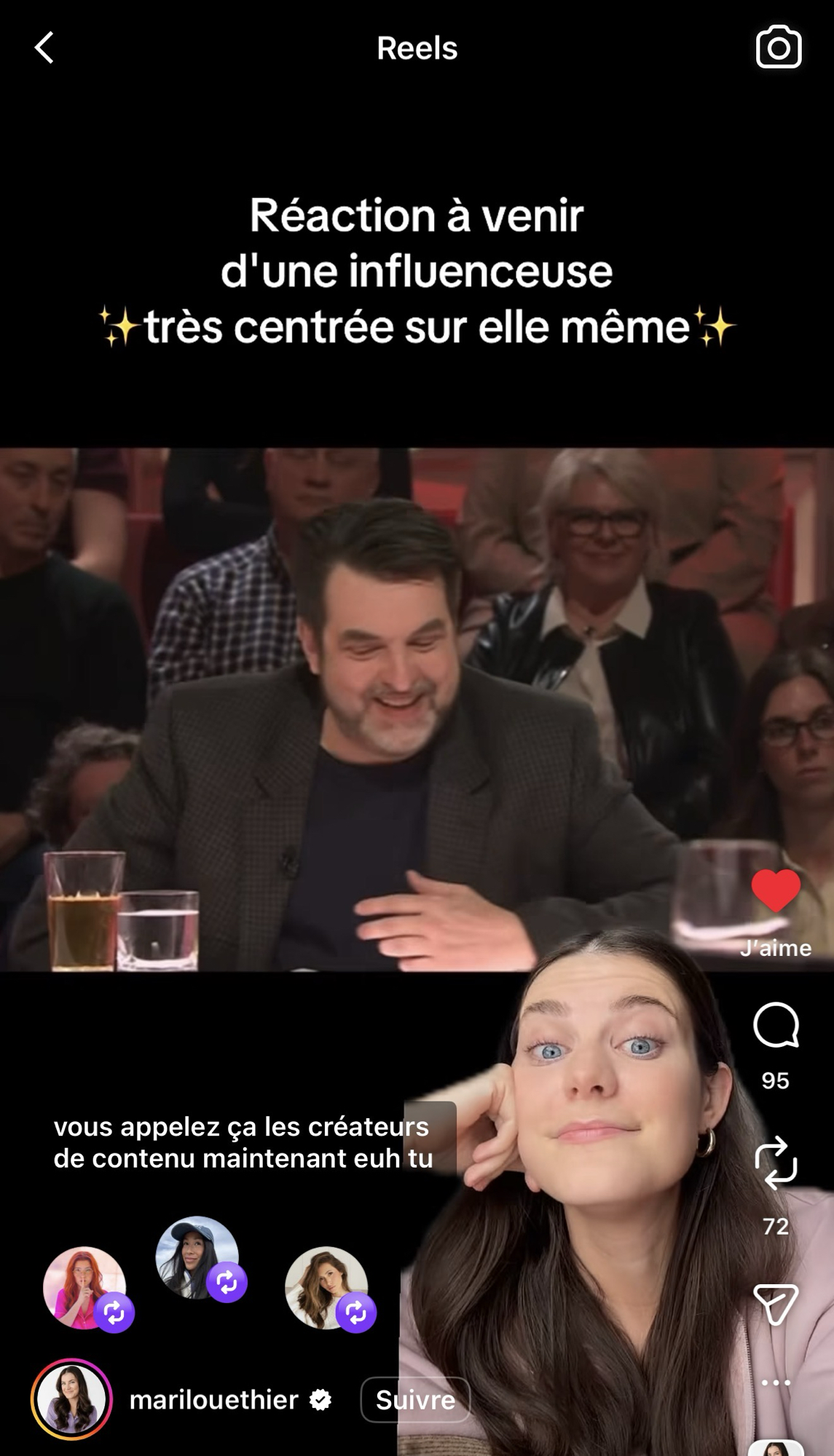
Au fond, je pourrais aussi bien appeler mes Chroniques de l’ombre des « Chroniques du voyage intérieur », et vice-versa. Dimanche dernier, à Tout le monde en parle, on questionnait des créateurs de contenu et des influenceurs sur leur utilisation du « Je, me, moi » (et sa suite). Voilà un beau sujet d’analyse !
Le Journal L’Extraterrestre s’est construit autour de quelques concepts clés : le Je, la projection de soi, la projection de l’autre, et la relation comme un pont entre ces deux projections. En substance, je décris une expérience humaine qui rejoint chacun et chacune en son for intérieur.
De mon côté, j’affirme n’avoir qu’une seule et même relation : avec Dieu, avec mon corps, avec moi-même et avec l’autre. Bien sûr, la forme varie d’une personne à l’autre, tout comme la profondeur. Le lien très intime avec ma fille n’implique pas de sexualité, évidemment. Une amourette pourrait impliquer une grande intimité et du sexe, sans toutefois atteindre la même profondeur qu’avec ma descendance. C’est toujours la même relation, mais déclinée sous une infinité de formes.
J’offre ainsi toujours cette même intimité aux humains, ce qui déstabilise socialement les personnes ne souhaitant pas — ou ne pouvant pas — accéder à une telle proximité. Pour autant, la forme reste toujours respectueuse des faits. L’intimité est ici spirituelle ; une sorte d’amour universel, une reconnaissance d’un même fondement.
Ainsi, la relation se construit toujours à partir de cette base unique. Spontanément, je cherche à rejoindre la relation de l’autre. Le hic, c’est que l’autre n’a pas toujours la même approche : sa relation change selon qu’il s’adresse à telle ou telle personne. Cela se joue beaucoup dans l’ombre, dans le non-verbal. Le « Tu » se déplace aussi.
De mon point de vue, le « Je » de l’autre est fragmenté. Ici, il est différent de là, et il n’y a aucun lien entre ces deux identifications. Ici, la bienveillance sert d’appui ; ailleurs, c’est la compétition à mes dépens. Pour l’œil non averti, rien n’y paraît, et c’est moi qui semble inconstant. Mon autisme me sensibilise à certains aspects tout à fait factuels qui passent inaperçus pour la plupart. Dans ces moments de crise, je découvre les jugements et les pensées que la personne entretient sur moi et sur elle-même. L’autre parle toujours de lui ; c’est simplement qu’il ne le sait pas.
Chronicles of the Inner Journey: Who are You?
« In this chronicle from The Extraterrestrial Journal, the author deconstructs the superficial use of the ‘I’ to explore the deep mechanics of identity and relationships. The title ‘Qui es-Tu?’ (Who are You?) calls upon the very essence of the interlocutor beyond their masks. The author postulates that intimacy is not a social variable, but an invariant spiritual foundation applied uniformly to all his interactions. His thesis highlights a fascinating paradox: what is perceived as ‘inconsistency’ in the autistic individual is, in reality, a reflection of the other’s own fragmentation. By refusing social compartmentalization, the author becomes an involuntary mirror that reveals the projections and judgments of his counterpart. It is a call for relational clarity where human encounters become a true bridge between two realities. »
Chronicles of the Inner Journey: Who are You?
Ultimately, I could just as easily call my Chronicles of the Shadow « Chronicles of the Inner Journey, » and vice versa. Last Sunday on Tout le monde en parle, content creators and influencers were being questioned about their use of « I, me, mine » (and The sequel). What a fascinating subject for analysis!
The Extraterrestrial Journal was built around a few key concepts: the « I, » the projection of self, the projection of the other, and the relationship as a bridge between these two projections. In essence, I am describing a human experience that resonates with everyone in their innermost self.
For my part, I maintain that I have only one and the same relationship: with God, with my body, with myself, and with the other. Of course, the form varies from one person to another, as does the depth. The deeply intimate bond with my daughter does not involve sexuality, obviously. A fling might involve great intimacy and sex without ever reaching the same depth as the bond with my offspring. It is always the same relationship, yet expressed in infinite forms.
Thus, I always offer this same intimacy to humans, which socially destabilizes those who do not wish to—or cannot—access such proximity. Nevertheless, the form always remains respectful of the facts. Here, intimacy is spiritual; a kind of universal love, a recognition of the same foundation.
Consequently, a relationship is always constructed from this single base. Spontaneously, I seek to meet the other’s relationship. The catch is that the other does not always have the same approach: their relationship changes depending on whom they are addressing. This plays out largely in the shadows, in people’s non-verbal cues. The « You » shifts as well.
From my point of view, the other’s « I » is fragmented. Here, it is different from there, and there is no link between these two identifications. In one instance, benevolence serves as a support; in another, it is competition at my expense. To the untrained eye, none of this is apparent, and it is I who seem inconsistent. My autism sensitizes me to certain factual aspects that go unnoticed by most. In these moments of crisis, I discover the judgments and thoughts that the person holds about me and about themselves. The other is always talking about themselves; they simply don’t know it.