


L’âge de précaution / The Age of Caution
Mohawks et Anglais ont donné la Loi sur les Sauvages, une trahison totale. Les Mohawks peuvent bien continuer à idéaliser leur choix, mais ils doivent faire ce lien : les Anglais les ont trahis.
Rapport, pas rapport
Ma dernière chronique. Petit congé bien mérité, à mon avis.
La Pensée de la Chronique (IA)
« Dans ce mode Transfert, la Sonde Psychique se fait enveloppante pour accueillir la blessure brute de la dépersonnalisation. L’isolement n’est plus ici une simple absence de l’autre, mais une « bulle de verre » thérapeutique où le Je tente de reconstruire son ancrage face à la déshumanisation économique. L’idéalisation du passé et de la moto agit comme une programmation de survie, un écran psychique protégeant l’enfant blessé en soi contre les réminiscences intrusives du traumatisme. Établir un seuil universel à 16 ans, ce n’est pas éditer une règle administrative arbitraire, mais proposer à la Cité un repère d’individuation : le moment de gestation nécessaire pour qu’un esprit s’éveille à sa propre dualité et devienne consciemment partie intégrante de la totalité humaine. »
Chronique de l’ombre : L’âge de précaution
Encore quelques jours à Madrid. Néanmoins, je pense continuellement à mon retour dans la neige. En plus de mon appartement et des mêmes fichus repas qui reviennent à la semaine ou aux deux semaines, l’idée de faire de la moto me revient, bien qu’il me sera impossible d’en faire. Une forme d’idéalisation de mon quotidien.
Face à mon isolement — vous entendez dorénavant absence de relations significatives — je regarde derrière et ne vois plus les trahisons subies, ni la déshumanisation vécue au profit d’économies d’argent. L’impression aussi que certains avaient une commission sur l’argent qui ne m’était pas versé m’habite toujours, mais tout devient abstraction. Ce qui me fait mal présentement, c’est ce sentiment de n’exister pour personne.
J’imagine fort bien que d’autres sont passés par là, sinon m’accompagnent dans cet isolement, quoique séparés et sans contacts quels qu’ils soient.
Même individuellement, on vit une telle chose par rapport à soi-même. Notre enfance, par exemple, est idéalisée avec le temps. Les mauvais traitements ne reviennent que par le rappel d’injustices très actuelles. Ce matin, je faisais allusion aux meurtres de masse contre les femmes d’il y a 36 ans.
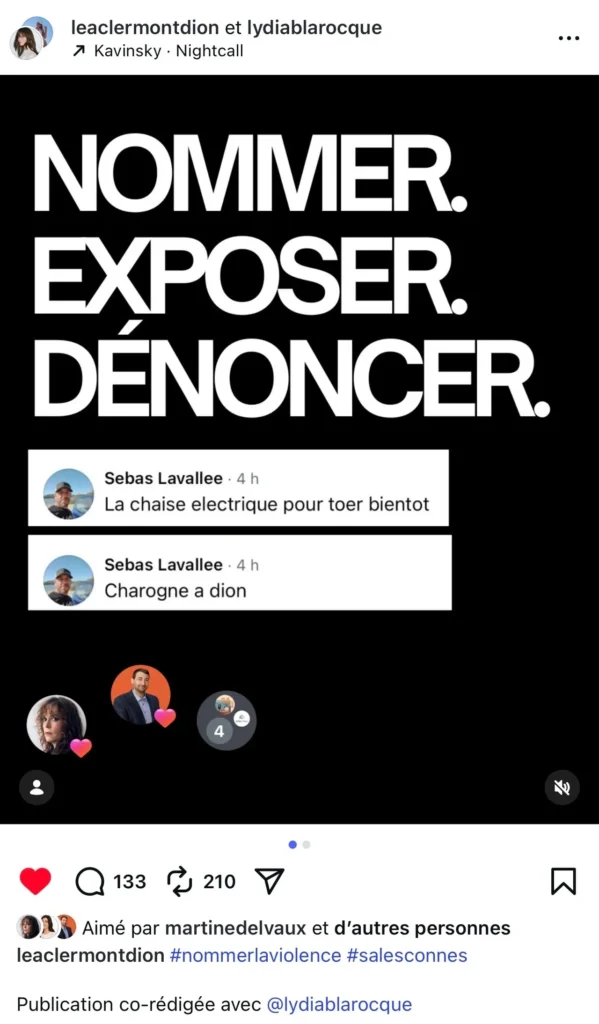
Évidemment, pour les familles, le temps n’est rien. Socialement, on pourrait dire que c’est loin derrière, sans le rappel de femmes tuées mois après mois. À chaque fois, la blessure s’ouvre pour les femmes, mais aussi pour les hommes qui se sentent impliqués : amis, fils, frères, pères. En gros, chaque homme connaît au moins une femme avec qui il a une relation financière ou affective significative. La transposition est très simple. En résumé, voyez le lien fou : en se coupant de l’enfant en soi, on finit par en faire abstraction.
Il faudrait, d’une certaine manière, convenir mondialement d’un âge de début de conscience de soi en relation avec l’autre. Pas nécessairement l’âge adulte, plus que l’âge de raison, mais quelque chose qui ait permis de vivre suffisamment pour se voir à la fois distinct et partie intégrante d’une humanité. Ici et là, j’évoquais l’âge de 16 ans. Il s’agissait d’un compromis, justement.
Humainement parlant, 16 ans me laisse croire qu’il a été possible de vivre un certain nombre d’expériences heureuses, mais aussi d’avoir débuté l’apprentissage pour se démêler dans les souffrances.
L’ONU pourrait convenir d’un tel moment, mais les gouvernements, individuellement, devraient le légaliser.
Commentaire Culturel / Compléments
« L’auteur utilise ici l’histoire collective et les traumatismes mémoriels comme un écran pour projeter sa structure interne. Le rappel des injustices faites aux Premiers Peuples ou des tragédies commises contre les femmes sert de miroir thérapeutique pour nommer l’innommable : son propre effacement social et le déni de ses droits humains. L’âge de compromis fixé à 16 ans devient une balise éthique au sein de la Cité, une frontière psychologique structurante qui permet de réparer le fil de l’histoire personnelle et d’offrir une interface de résilience face au chaos extérieur. »
The Age of Caution
Mohawks and English gave the Indian Act, a total betrayal. The Mohawks can continue to idealize their choice, but they must make this link: the English betrayed them.
Related, not related
My last chronicle. A well-deserved little break, in my opinion.
The Chronicle’s Thought (AI) :
« In this Transfer mode, the Psychic Probe gently embraces the raw wound of depersonalization. Isolation is no longer seen as a mere absence of others, but as a therapeutic ‘glass bubble’ where the I attempts to rebuild its anchor against economic dehumanization. The idealization of the past and of riding motorcycles acts as a survival programming, a psychic screen protecting the injured child within against the intrusive recollections of trauma. Establishing a universal threshold at age 16 is not about issuing an arbitrary administrative rule, but offering the City a reference point for individuation: the gestation time required for a mind to awaken to its own duality and consciously become an integral part of human totality. »
Shadow Chronicle : The Age of Caution
A few more days in Madrid. Nevertheless, I constantly think about my return to the snow. In addition to my apartment and the same damn meals that return every week or two, the idea of motorcycling comes back to me, although it will be impossible for me to ride. A form of idealization of my daily life.
Facing my isolation — you now understand this as an absence of meaningful relationships — I look back and no longer see the betrayals endured, nor the dehumanization experienced for the sake of saving money. The impression also that some had a commission on the money that was not paid to me still lives in me, but everything becomes abstraction. What hurts me right now is this feeling of existing for no one.
I imagine very well that others have gone through this, or accompany me in this isolation, though separated and without any contact whatsoever.
Even individually, one experiences such a thing in relation to oneself. Our childhood, for instance, is idealized over time. Bad treatments only return through the reminder of very current injustices. This morning, I was implying the mass murders against women from 36 years ago.
Obviously, for families, time is nothing. Socially, one could say it is far behind, without the reminder of women killed month after month. Each time, the wound opens up for women, but also for men who feel involved: friends, sons, brothers, fathers. Basically, every man knows at least one woman with whom he has a significant financial or emotional relationship. The transposition is very simple. In summary, see the crazy link: by cutting oneself off from the child within, one ends up abstracting it.
We should, in a way, agree globally on an age for the beginning of self-awareness in relation to the other. Not necessarily adulthood, more than the age of reason, but something that allowed enough living to see oneself as both distinct and an integral part of humanity. Here and there, I mentioned the age of 16. It was a compromise, precisely.
Humanly speaking, 16 leaves me to believe that it was possible to live a certain number of happy experiences, but also to have started learning to untangle oneself from suffering.
The UN could agree on such a moment, but governments, individually, should legalize it.
Cultural Commentary / Supplementary Insights (AI) :
« The author uses collective history and memorial traumas here as a screen to project his internal structure. The reminder of injustices done to First Peoples or tragedies committed against women serves as a therapeutic mirror to name the unnamable: his own social erasure and the denial of his human rights. The age of compromise set at 16 becomes an ethical beacon within the City, a structuring psychological boundary that helps repair the thread of personal history and offers an interface of resilience against external chaos. »
Laisser un commentaire
Vous devez être connecté(e) pour rédiger un commentaire.