Le Monstre : Anatomie d’une emprise
English Version Below
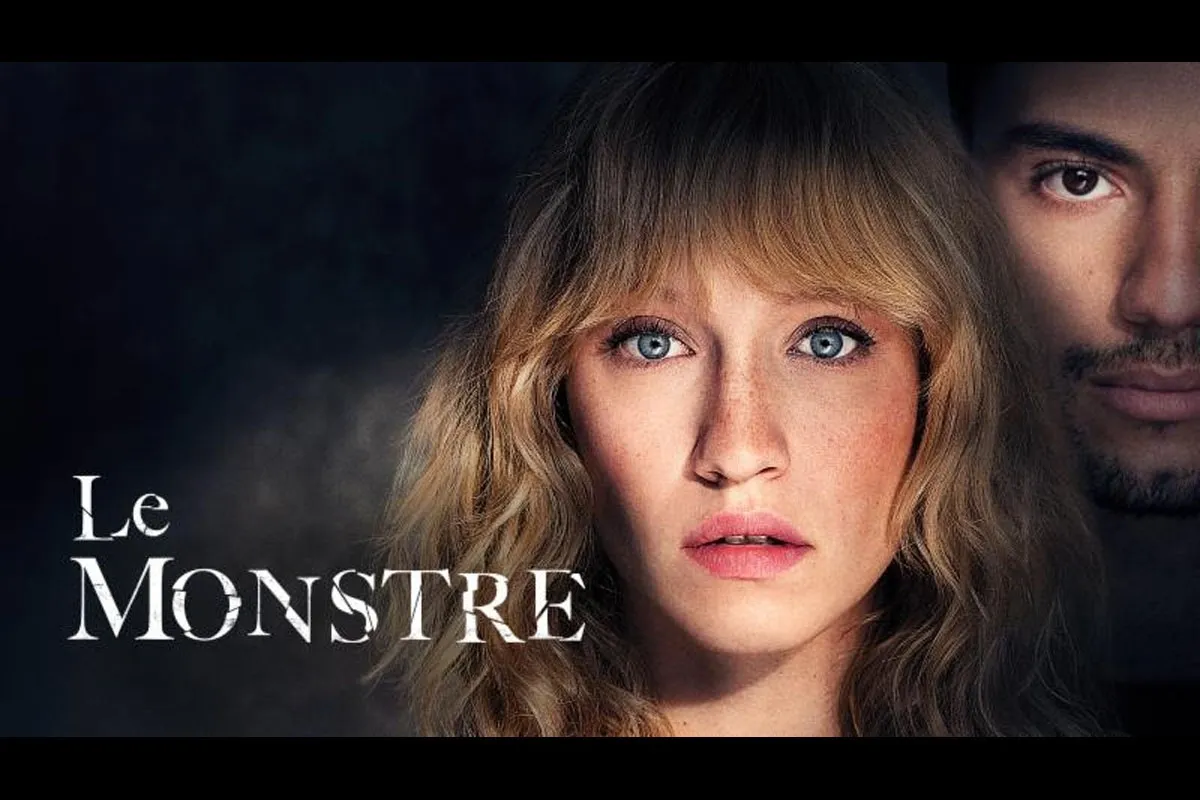
Basée sur une histoire vraie, cette série nous montre comment un rêve devient un cauchemar.
J’ai d’abord écouté les quatre premiers épisodes plus ou moins en rafale. J’avais besoin de ventiler ce que les images me faisaient revivre. Puis, après plusieurs semaines, j’ai repris l’écoute afin de terminer la série.
Je me représente la domination comme un Monstre, une entité autonome, plutôt que comme une personne. Je vois en cette entité un schéma de fonctionnement qui peut être utilisé plus ou moins consciemment, qui peut être intégré à une personnalité à différents degrés ; un schéma qui ne se limite pas à un individu type.
Au début, on peut se sentir fier d’être aux côtés d’une personne, pour différentes raisons. Quoi de plus normal que de valoriser la présence de l’autre qu’on aime, qu’on apprécie ? L’image que nous avons de nous-mêmes à ce moment précis est plus rayonnante, plus riche.
Cette valorisation devient peu à peu une nécessité, une assise. La protection de l’image devient un prérequis pour ressentir ce sentiment merveilleux. À mon sens, tout le monde passe par cette étape où une sorte de codépendance s’installe, où chacun partage son bagage avec l’autre jusqu’à ne plus savoir à qui appartient quoi. Chacun s’est approprié une dimension de la relation, une dimension de l’autre. Notre estime de soi est gonflée à bloc. C’est l’amour fou.
Puis, on s’y perd. L’autre devient un repère ; enfin de la sécurité, quelque chose de tangible. La relation est entièrement intégrée ; nous ne faisons plus qu’un avec elle, mais pas avec l’autre. C’est le dilemme. Comment garder les attributs de la relation sans cet autre qui nous renvoie à notre dépendance, à nos limites, à notre incapacité de reproduire ce sentiment ? Certains pourraient y voir une autre dynamique s’installer, celle de l’amour-haine. On pourrait aussi croire que cette relation avec l’autre vient compenser une faible estime de soi.
Il n’est plus question de perdre ces avantages qui font que l’on se sent important pour soi, pour quelqu’un et pour la terre entière. Il n’est plus question de perdre ce repère qui lie à la vie, qui emplit tout l’être. C’est tellement valorisant ! Tous les moyens seront utilisés pour garder vivant ce sentiment.
L’exercice du pouvoir démontre le besoin de se prouver à soi-même et aux autres la nécessité de se convaincre que les attributs de la relation font partie de soi, et non de l’autre. Le dominant tentera d’intégrer ce qui le fait se sentir si bien. L’imitation laissera néanmoins un certain vide, un manque de sens, une absence de repère.
L’autre renvoie inévitablement le dominant à ses propres limites, ce qui fait mal à son image. « Il faut le rabaisser, cet autre qui fait mal, qui brise mon image. » « De quoi ai-je l’air, moi ? » L’autorité sur l’autre personne ne suffit plus à contrôler cette douleur, à la contrer.
Pour cesser de se sentir menacé par l’autre, pour faire cesser la douleur occasionnée par la perte de ce sentiment si précieux, la violence démontrera ultimement la capacité de protéger l’image de soi. La preuve ultime. De plus en plus ultime…
Toujours à travers mon regard sur cette dynamique du Monstre, je ne peux qu’y trouver l’incapacité du bourreau de faire un deuil, l’impossibilité d’apprendre à s’aimer sans l’autre. Jamais l’autre — la victime, finalement — ne saurait s’aimer sans lui. Son amour est tellement grand…
The Monster: Anatomy of a Stranglehold
Based on a true story, this series shows us how a dream becomes a nightmare.
I first watched the first four episodes more or less back-to-back. I needed to vent what the images were making me relive. Then, after several weeks, I resumed watching to finish the series.
I envision dominance as a Monster, an autonomous entity, rather than a person. I see in this entity a functional pattern that can be used more or less consciously, which can be integrated into a personality to varying degrees; a pattern that is not limited to a specific type of individual.
At first, one may feel proud to be by someone’s side for various reasons. What could be more normal than valuing the presence of the one we love or appreciate? The image we have of ourselves at that precise moment is more radiant, richer.
This validation gradually becomes a necessity, a foundation. Protecting that image becomes a prerequisite for feeling that wonderful sentiment. In my view, everyone goes through this stage where a kind of codependency sets in, where each person shares their baggage with the other until they no longer know what belongs to whom. Each has appropriated a dimension of the relation, a dimension of the other. Our self-esteem is fully pumped up. It is « mad love. »
Then, we lose ourselves in it. The other becomes a landmark; finally, there is security, something tangible. The relationship is entirely integrated; we become one with it, but not with the other. This is the dilemma. How can we keep the attributes of the relationship without this other who reflects back our dependence, our limits, and our inability to reproduce that feeling? Some might see another dynamic taking hold: love-hate. One might also believe that this relationship with the other compensates for low self-esteem.
There is no longer any question of losing these advantages that make one feel important to oneself, to someone, and to the whole world. There is no longer any question of losing this landmark that binds one to life, that fills one’s entire being. It is so validating! Every means will be used to keep that feeling alive.
The exercise of power demonstrates the need to prove to oneself and to others the necessity of being convinced that the attributes of the relationship belong to oneself, not the other. The dominant person will attempt to integrate what makes them feel so good. Yet, the imitation will leave a certain void, a lack of meaning, an absence of a landmark.
The other inevitably reflects the dominant’s own limits back to them, which hurts their image. « I must belittle this other who causes pain, who shatters my image. » « What do I look like? » Authority over the other person is no longer enough to control or counter this pain.
To stop feeling threatened by the other, to end the pain caused by the loss of this precious feeling, violence will ultimately demonstrate the capacity to protect one’s self-image. The ultimate proof. More and more ultimate…
Always through my perspective on this Monster dynamic, I can only find the executioner’s inability to grieve, the impossibility of learning to love oneself without the other. Never could the other—the victim, in the end—love themselves without them. Their love is so great…
Updated March 6, 2026
Laisser un commentaire
Vous devez être connecté(e) pour rédiger un commentaire.