
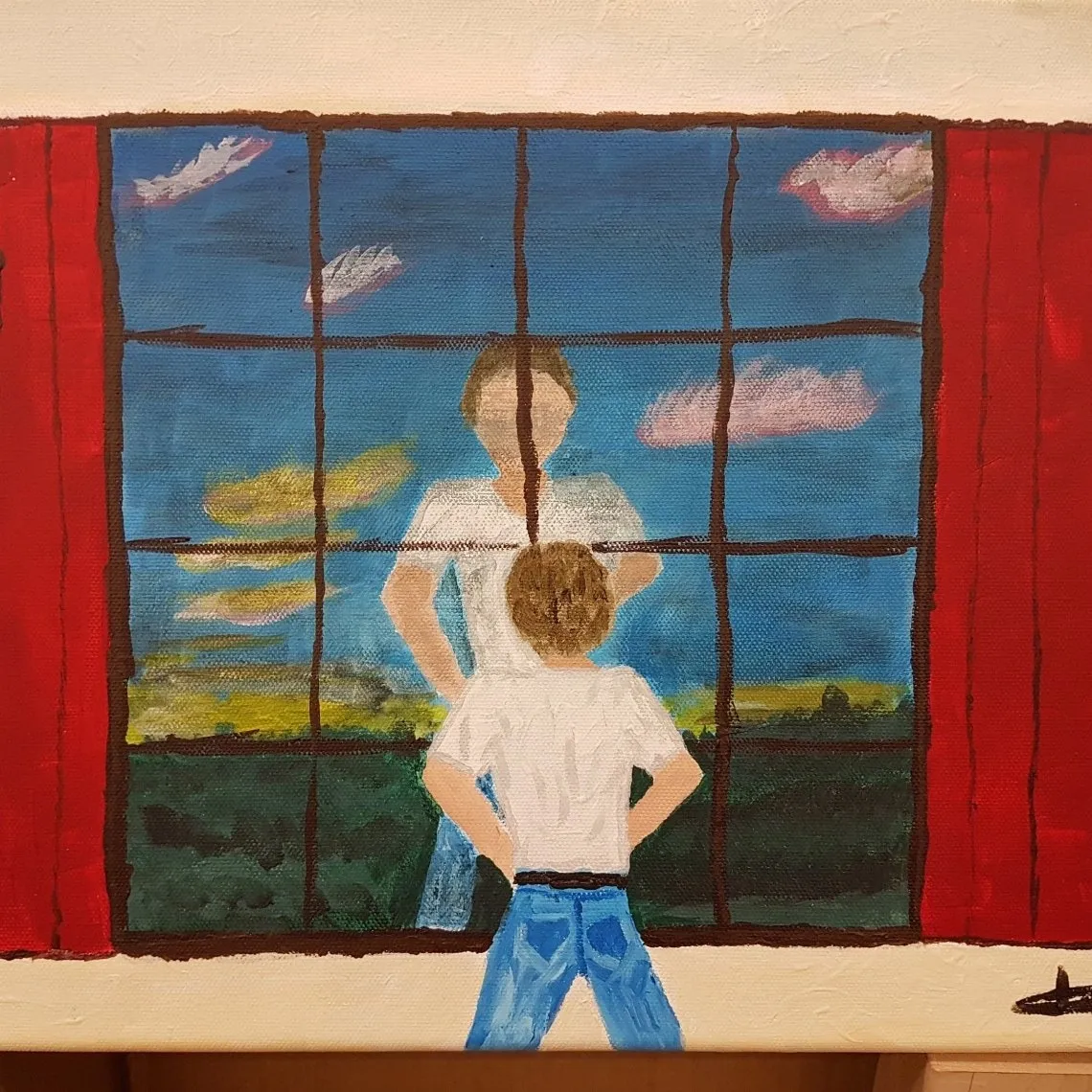
Les hommes ont besoin d’aide !
English version below
Je suis né homme. Mon avenir était tracé : médecin, administrateur d’un hôpital, marié, père, sans oublier la fortune financière. Rien n’empêchait ma mère de croire que ces réalisations étaient possibles pour moi. Moi non plus, d’ailleurs. Si j’avais été une femme, cela eût été différent.
Pourtant. Mes parents se sont séparés lorsque j’avais 18 mois, puis ils ont divorcé. C’était la période où le divorce commençait à être socialement possible, où la femme pouvait plus ouvertement dénoncer les hommes, où elle pouvait commencer à vivre ses propres rêves. Déjà, mes chances étaient inégales par rapport à ceux qui m’avaient précédé. En plus d’être identifié — plus ou moins consciemment — comme celui qui avait provoqué le divorce des parents, je n’aurais jamais de base sur ce qu’est une famille biologique. Mes sœurs et mon frère m’aimaient, bien sûr, mais concrètement, cela n’impliquait que très peu de temps de présence. C’était un amour senti, sûrement, bien que teinté d’une certaine indifférence.
Ma mère compensait la perte de mon père par ma présence ; j’étais un objet de substitution d’un côté, et le témoin de ses critiques contre les hommes — et contre mon père — de l’autre. J’étais asexué. Elle ne voyait pas l’homme en moi. Elle ne voyait pas non plus qu’elle me privait d’une identification à mon genre et à mon père. Pour elle, n’étais-je pas « ses » hommes ?
Mon père aurait pu m’offrir cette identification, tout de même. Mais non. Il voyait en moi trop de ressemblances avec ma mère. À ses yeux, je n’étais pas un homme, j’étais une femme. Plus tard, par exemple, j’avais trop hésité à dire que je voulais me réinscrire au hockey. J’étais comme ma mère, je ne voulais pas faire comme lui. Pour se donner raison, peut-être — je ne le saurai jamais —, il n’a pas insisté pour que je continue. J’aurais aimé qu’il insiste. Mon père aussi critiquait les femmes, toujours avec un parallèle sous-entendu avec ma mère. Je ne pouvais pas aimer ma mère si je voulais aimer mon père. Ça part mal.
J’ai déjà raconté avoir été violé par deux adolescents lorsque j’avais 6 ou 7 ans, et laissé pour mort. Ces jeunes ont voulu me faire oublier ce qui s’était passé et m’ont frappé à la tête ; le dernier coup fut trop fort et m’a fait perdre connaissance. Je respirais à peine ; ils croyaient que j’étais mort et m’ont transporté dans un bois derrière l’immeuble où j’habitais. Je me suis réveillé dans la soirée, ayant oublié tout ce qui s’était produit. J’ai aussi commencé à avoir des troubles de lecture où le sens des mots se perdait. Je me souviens de la sensation éprouvée lors de la lecture des questions : chaque mot était séparé de l’autre, plus rien ne faisait sens. Ça aussi, ça part mal.
Quoi qu’il en soit, cela représente la base sur laquelle j’ai dû bâtir ma vie. Récemment, j’ai aussi appris que tout cela se jouait sur un fond d’autisme. L’absence de diagnostic pour un aspect si fondamental de mon fonctionnement est tout simplement inhumaine. En plus de ce questionnement sur ce que je suis sexuellement — ni homme, ni femme —, il y avait toujours cette différence neurologique qui me faisait passer tantôt pour un déficient intellectuel, tantôt pour un malade mental, et très rarement pour un doué. La vie n’a pas été facile.
Je fais quoi maintenant ? Après une psychanalyse d’environ dix ans, des thérapies diverses et beaucoup de deuils — donc aussi beaucoup de résilience —, j’ai obtenu cette fameuse confirmation sur ma neurodiversité. Ce n’est pas tout. L’enfant asexué en moi occupait encore toute la place et je n’arrivais pas à m’affirmer comme homme. J’ai commencé à m’occuper de cet enfant en prenant la place qui me revient. Je peux maintenant m’occuper de lui, avoir de l’empathie pour lui.
Justement, c’est quoi, s’affirmer comme homme ? Voilà. Les hommes ont besoin d’aide. Comment s’affirme-t-on en tant qu’homme ? Est-ce en offrant cette empathie ? Est-ce suffisant ?
MAJ 5 mars 2026
Men Need Help!
I was born a man. My future was mapped out: doctor, hospital administrator, married, father, not to mention financial wealth. Nothing stopped my mother from believing these achievements were possible for me. Nor me, for that matter. Had I been a woman, it would have been different.
Yet. My parents separated when I was 18 months old, then divorced. It was the period when divorce was beginning to be socially possible, when women could more openly denounce men, when they could begin to live their own dreams. Already, my chances were unequal compared to those who had come before me. In addition to being identified—more or less consciously—as the one who had caused the parents’ divorce, I would never have a foundation of what a biological family is. My sisters and my brother loved me, of course, but in concrete terms, this involved very little presence. It was a felt love, surely, though tinged with a certain indifference.
My mother compensated for the loss of my father with my presence; I was a substitute object on one side, and the witness to her criticisms of men—and of my father—on the other. I was asexual. She did not see the man in me. Nor did she see that she was depriving me of identification with my gender and my father. For her, was I not « her » men?
My father could have offered me that identification, nonetheless. But no. He saw in me too many resemblances to my mother. In his eyes, I was not a man; I was a woman. Later, for example, I had hesitated too much to say I wanted to re-enroll in hockey. I was like my mother; I didn’t want to do like him. To prove himself right, perhaps—I will never know—he did not insist that I continue. I would have liked him to insist. My father also criticized women, always with an implied parallel to my mother. I could not love my mother if I wanted to love my father. It’s a bad start.
I have already told of being raped by two teenagers when I was 6 or 7 years old, and left for dead. Those youths wanted to make me forget what had happened and struck me on the head; the last blow was too hard and knocked me unconscious. I was barely breathing; they thought I was dead and carried me to a woods behind the building where I lived. I woke up in the evening, having forgotten everything that had occurred. I also began to have reading troubles where the meaning of words was lost. I remember the sensation felt when reading questions: each word was separated from the other, nothing made sense anymore. That, too, is a bad start.
Regardless, this represents the foundation on which I had to build my life. Recently, I also learned that all of this was playing out against a backdrop of autism. The absence of a diagnosis for such a fundamental aspect of my functioning is simply inhumane. In addition to this questioning of what I am sexually—neither man nor woman—there was always this neurological difference that made me pass sometimes for intellectually disabled, sometimes for mentally ill, and very rarely for gifted. Life has not been easy.
What do I do now? After about ten years of psychoanalysis, various therapies, and many bereavements—hence also a lot of resilience—I obtained that famous confirmation regarding my neurodiversity. That’s not all. The asexual child in me still took up all the space, and I could not assert myself as a man. I have started to take care of that child by taking the place that is rightfully mine. I can now care for him, have empathy for him.
Precisely, what does it mean to assert oneself as a man? There it is. Men need help. How does one assert oneself as a man? Is it by offering this empathy? Is it enough?
Updated March 5, 2026
Laisser un commentaire
Vous devez être connecté(e) pour rédiger un commentaire.