Le pouvoir
La Matinale
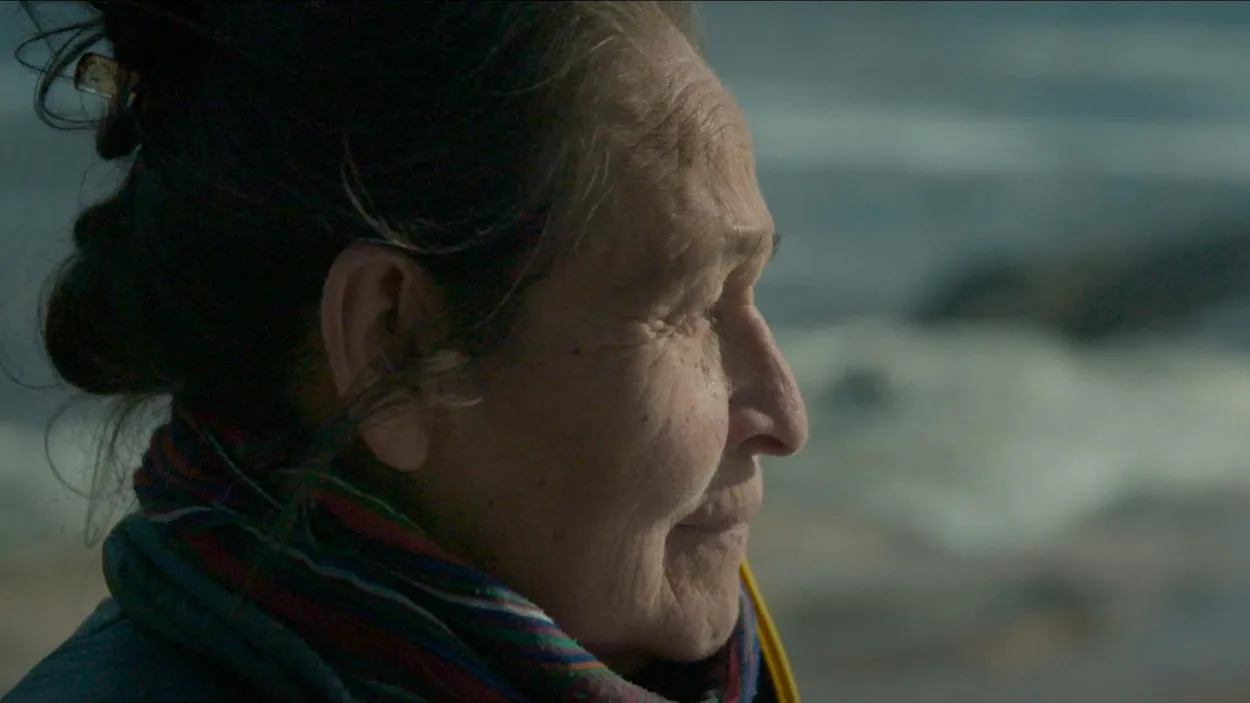
La Matinale, une excellente série télévisée écoutée sur Apple TV+. « Portrait sans concession des coulisses d’une matinale télé aux États-Unis, alors qu’éclate au grand jour un scandale d’inconduites sexuelles. » Wikipédia.
Toute personne en relation avec le pouvoir, qu’elle en soit possesseur ou subordonnée, devrait écouter les dix épisodes de cette série. Il est essentiel d’apprendre à vivre judicieusement avec le pouvoir, avec ses différentes facettes, et de comprendre qu’il ne s’agit que d’un aspect de l’être humain.
En complément :
- Wikipédia : La Matinale
- La Presse : Jennifer Aniston dans une série matinale sur Apple TV+
Mon texte : Le pouvoir
Il y a dans l’agression sexuelle, au-delà de toute dénonciation, quelque chose qui me fait sentir pris au piège en tant qu’homme.
D’un côté, j’ai porté préjudice à une femme en particulier, et à toutes les femmes à travers celle-ci ; alors que de l’autre, on m’a fait subir, avant et après cet événement traumatisant, des agressions à répétition. J’ai été abusé affectivement, physiquement et intellectuellement. Les « justifications » sont passées par le fait que je n’étais pas sexualisé, que j’étais un homme, que je n’étais pas intelligent ou, encore plus facilement, que j’étais un malade mental. Ces hommes et ces femmes m’ont retiré mes droits humains.
Ce qui m’a conduit à sortir de la réalité, à l’expression inappropriée de mes frustrations, au besoin de dire aux autres que j’existe — peut-être surtout pour me le prouver — est certainement cet isolement malsain découlant de l’autisme, de ma famille humainement malade et, donc, de mon incapacité à me lier adéquatement aux autres. Il est question ici d’apprentissage, d’un vide à combler. Ce mal grandissant m’incitait à me réfugier progressivement dans un autre monde, dans une autre réalité, jusqu’à ce moment fatidique.
Ceci étant dit, les étapes obligatoires à traverser pour l’agresseur, me semble-t-il, sont l’effondrement de l’image de soi, l’apprentissage à se relever plus sainement, en arriver à demander pardon et à se l’accorder à soi-même. Ainsi, une réhabilitation sociale est possible et plus saine. Il m’apparaît approprié de mentionner que, selon moi, ce cheminement se fera probablement en deux temps. Un premier où il y aura une apparence de justice, c’est-à-dire que le parcours se fera davantage en superficie, puis un deuxième où ce voyage sera plus senti, plus connecté à ce que nous sommes profondément.
« Accusateur ou victime », quelle est la meilleure désignation ? Je n’ai pas la réponse. Je regarde le vécu : l’effondrement de l’image de soi, de son amour-propre, le besoin de réapprendre à s’aimer, la nécessité de se pardonner et, finalement, l’obligatoire persévérance pour se réhabiliter socialement, amoureusement ou, globalement, pour refaire confiance à l’autre. À la suite de l’agression, on ne se voit plus comme un homme ou comme une femme, mais on est plutôt réduit à l’image que l’agresseur avait de nous, au sentiment laissé par le geste. Nous sommes déshumanisés.
Dans ce texte, je dis : « La victime se voit à travers les yeux de son agresseur. » C’est bien ce qui est ressorti de ma psychanalyse. Inconsciemment, je portais le même regard que ces personnes avaient sur moi au moment des faits. Donc, deux versions opposées réunies en soi pour comprendre la dépossession de notre identité, son bris. Un pont devra établir les bases pour un nouveau départ, pour se reconstruire humainement.
Comment nommer ce qui doit être dénoncé ? Sexisme systémique ? Le pouvoir est souvent ciblé comme la cause. Dans une société essentiellement administrée par l’homme, on peut comprendre que gravir les échelons se fasse plus naturellement pour les hommes, puisque les normes ont été établies au fil des siècles par ceux-ci. Bon gré, mal gré, il s’agit de notre héritage commun. Oui, je crois qu’on peut utiliser cette expression « bancale » de sexisme systémique.
Je préfère lâcher prise sur le concept de pouvoir pour expliquer l’agression sexuelle, sinon j’ai l’impression de mettre l’accent sur un symptôme plutôt que sur une cause, et cela me maintient dans un labyrinthe sans issue où l’autre prend un pouvoir sur moi et me met dans une situation où j’attends qu’il me le redonne. Entre-temps, je suis à sa merci. Un peu par la force des choses, j’en suis venu à devoir verbaliser le monde conceptuel que j’habite, ce que je vis, et à faire des parallèles poétiques avec votre réalité neurotypique, de laquelle j’ai parfaitement conscience, néanmoins.
Ainsi, malgré les difficultés, j’encourage à porter plainte à l’autorité compétente parce qu’il s’agit d’un processus collectif pour trouver l’équilibre en tant que société et, progressivement, pour les individus eux-mêmes, toute différence confondue.
Chercher le pouvoir est une illusion, ce n’est pas ce qui importe. Ce n’est là qu’un effet secondaire. L’objectif est ailleurs.
Un texte à développer pour Noël. 🙂
En complément :
- Lettre aux femmes (publié le 8 février 2019)
- La transparence (publié le 31 mai 2019)
- Le deuil de la majorité (publié le 14 juin 2019)
10 mars 2026
Power
The Morning Show
The Morning Show, an excellent television series watched on Apple TV+. « A candid portrait of the behind-the-scenes of a morning TV show in the United States, as a sexual misconduct scandal comes to light. » Wikipedia.
Anyone in a relationship with power, whether they possess it or are subordinate to it, should listen to the ten episodes of this series. It is essential to learn to live judiciously with power, with its different facets, and to understand that it is only one aspect of the human being.
In addition
- Wikipedia: The Morning Show
- La Presse: Jennifer Aniston in a morning series on Apple TV+
My text: Power
There is in sexual assault, beyond any denunciation, something that makes me feel trapped as a man.
On one hand, I caused harm to a specific woman, and to all women through her; while on the other, I was subjected, before and after this traumatic event, to repeated assaults. I was abused emotionally, physically, and intellectually. The « justifications » went through the fact that I was not sexualized, that I was a man, that I was not intelligent, or, even more easily, that I was mentally ill. These men and women stripped me of my human rights.
What led me to drift from reality, to the inappropriate expression of my frustrations, to the need to tell others that I exist—perhaps above all to prove it to myself—is certainly this unhealthy isolation resulting from autism, from my humanly sick family, and therefore, from my inability to relate adequately to others. It is a matter of learning here, of a void to be filled. This growing evil urged me to progressively take refuge in another world, in another reality, until that fateful moment.
That being said, the mandatory stages for the aggressor to go through, it seems to me, are the collapse of self-image, learning to rise again more healthily, reaching the point of asking for forgiveness and granting it to oneself. Thus, social rehabilitation is possible and healthier. It seems appropriate to mention that, in my view, this journey will probably take place in two stages. A first one where there will be an appearance of justice, meaning the journey will be more superficial, then a second one where this journey will be more felt, more connected to who we are deeply.
« Accuser or victim, » which is the better designation? I do not have the answer. I look at the experience: the collapse of self-image, of self-esteem, the need to learn to love oneself again, the necessity of forgiving oneself, and finally, the mandatory perseverance to rehabilitate oneself socially, romantically, or, globally, to trust the other again. Following the assault, one no longer sees oneself as a man or a woman, but rather reduced to the image the aggressor had of us, to the feeling left by the act. We are dehumanized.
In this text, I say: « The victim sees themselves through the eyes of their aggressor. » This is indeed what emerged from my psychoanalysis. Unconsciously, I held the same gaze that these people had on me at the time of the events. So, two opposing versions united within oneself to understand the dispossession of our identity, its breaking. A bridge must establish the bases for a new start, to rebuild oneself humanly.
How to name what must be denounced? Systemic sexism? Power is often targeted as the cause. In a society essentially administered by men, it is understandable that climbing the ladder happens more naturally for men, since the norms were established over centuries by them. Like it or not, it is our common heritage. Yes, I believe we can use this « wobbly » expression of systemic sexism.
I prefer to let go of the concept of power to explain sexual assault, otherwise I feel I am emphasizing a symptom rather than a cause, and that keeps me in a labyrinth with no exit where the other takes power over me and puts me in a situation where I wait for them to give it back to me. In the meantime, I am at their mercy. Somewhat by necessity, I have come to have to verbalize the conceptual world I inhabit, what I experience, and to make poetic parallels with your neurotypical reality, of which I am perfectly aware, nevertheless.
Thus, despite the difficulties, I encourage filing a complaint with the competent authority because it is a collective process to find balance as a society and, progressively, for the individuals themselves, across all differences.
Seeking power is an illusion; it is not what matters. That is only a side effect. The goal is elsewhere.
A text to develop for Christmas. 🙂
In addition
- Letter to Women (published February 8, 2019)
- Transparency (published May 31, 2019)
- Mourning the Majority (published June 14, 2019)
March 10, 2026