Chronique de l’ombre: « Connais-toi toi-même »
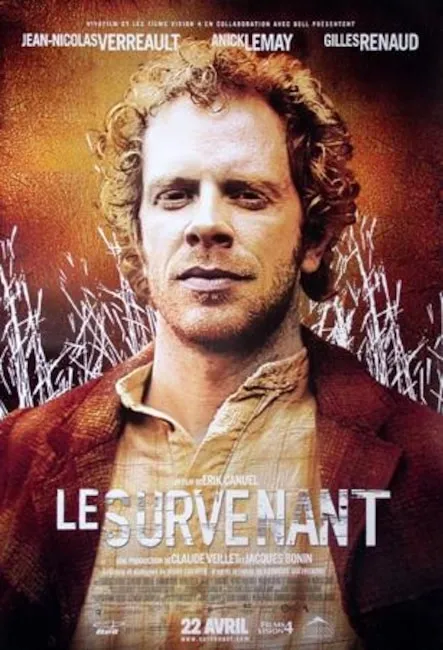
Le Survenant, d’après le roman de Germaine Guèvremont
« Au début du siècle, un étranger vient troubler la vie d’une petite communauté paysanne fermée sur elle-même. L’homme, qui ne veut pas s’identifier, est surnommé le « Survenant ». Aventurier dédaignant les conventions et l’esprit de clocher, il secoue les certitudes et scandalise, mais il suscite aussi l’admiration et même un grand amour. Le film est une adaptation du célèbre roman de Germaine Guèvremont et de la série télévisée qui a marqué le Québec dans les années 1960. » (Source : Téléfilm Canada)
En complément :
- Le Survenant (Livre audio sur Radio-Canada)
«Cette chronique analyse la figure du nomade comme une réponse à l’inadaptation sociale et spirituelle. L’auteur s’identifie au Survenant, ce personnage qui refuse l’esprit de clocher, pour illustrer son propre déracinement. Le texte dénonce violemment les « faux diagnostics » familiaux, perçus comme une forme de colonisation mentale et une dépossession de l’humanité. En transformant son isolement forcé en un « royaume meublé d’amour », l’auteur transmute son « chemin de croix » en une quête de résonance. La conclusion est un appel vibrant à l’interconnexion : ne plus être un étranger de passage, mais une note essentielle au sein de l’orchestre humain.»
Chronique de l’ombre: « Connais-toi toi-même »
En lisant ce livre de Germaine Guèvremont au cégep, j’ai ressenti de l’admiration pour le personnage du Survenant (Venant). De l’admiration, certes, mais aussi de la tristesse. Je percevais en lui une souffrance, un mal de vivre — une inadaptation à la société couplée à un besoin viscéral de vivre. Le film a réussi à me faire revivre cette recherche de liberté empreinte de douleur.
L’admiration découle sûrement de sa capacité à n’avoir aucune attache, ni envers un lieu ni envers une personne qui lui apporterait plus d’inconvénients que de joie. Ne faut-il pas préserver cette possibilité de partir, de quitter, de faire le deuil d’une situation pour continuer à apprendre ailleurs, dans une nouvelle réalité ? Le voyage est une si belle activité ; il « forme la jeunesse », dit-on. La vie nomade possède son propre attrait.
Ce mode de vie, plus proche d’une culture autochtone, s’oppose à la culture occidentale où il est souvent synonyme de dépossession, de déracinement et de fuite. Somme toute, c’est un mode de vie mal perçu. Pourtant, installés dans notre résidence principale, nous rêvons d’ajouter un chalet et de multiplier les voyages. Nous tentons de reproduire ce que nous repoussons. Le rêve de liberté est souvent associé à la retraite ou à la richesse : posséder suffisamment pour habiter le monde entier. Un mode de vie à la fois attirant et jugé péjorativement, oscillant entre le « connais-toi toi-même » et la fuite.
Dans mon isolement, j’apprenais à me connaître. À travers les Rosiliens, je vivais une réalité sociale qui m’était interdite dans ma vie quotidienne. Là encore, il s’agissait de faire le tour de ce que j’étais. Cette expérience m’apportait une grande connaissance de l’humain et de l’être spirituel que je suis. Toutefois, les limites sociales imposées par l’autisme, les traumas familiaux et — je l’affirme encore — quelques erreurs de ma part, me faisaient questionner ma relation avec Dieu, avec la Source de la Vie, avec la Vie elle-même. Ma foi était mise à l’épreuve. La remise en question de la validité de mes expériences, sous forme d’hypothèses de maladie mentale et de faux diagnostics, renforçait ce doute.
Dans ma recherche d’identité, j’étais en quelque sorte un nomade. Je n’avais nulle part où prendre racine, sinon dans cet isolement forcé — cette prison que j’appelle mon royaume parce que je l’ai meublé d’amour. Une tradition familiale ou sociétale aurait pu m’aider en créant un espace psychologique où m’enraciner, mais mes tentatives se sont révélées toxiques. Ma famille a choisi de projeter sur moi de faux diagnostics, tandis que je faisais face à une « Révolution tranquille » qui rejetait la religion et ses excès sans savoir en distinguer les traditions et les structures. Ces faux diagnostics sont devenus un vecteur de connaissance dans la souffrance : mon chemin de croix. Condamné, la fuite m’était impossible, car je portais en moi ce qui me faisait mal.
La dépossession de mon humanité a engendré graduellement un détachement face à ma condition imparfaite et à la vie en général. Aujourd’hui, j’ai besoin de l’autre, de son humanité. Je ne souhaite pas m’en accaparer, mais plutôt trouver une résonance de cette humanité en moi. Faire partie de l’orchestre, de l’ensemble, tout en étant la musique.
Chronicle of the Shadow: « Know Thyself »
The Outlander (Le Survenant), based on the novel by Germaine Guèvremont
« At the turn of the century, a stranger arrives to disrupt the life of a small, insular farming community. The man, who refuses to identify himself, is nicknamed the ‘Survenant’ (the Outlander). An adventurer who disdains conventions and parochialism, he shakes up certainties and causes scandal, yet he also inspires admiration and even a great love. The film is an adaptation of Germaine Guèvremont’s famous novel and the television series that left its mark on Quebec in the 1960s. » (Source: Telefilm Canada)
Supplemental material:
- Le Survenant (Audiobook on Radio-Canada)
This column analyzes the figure of the nomad as a response to social and spiritual maladjustment. The author identifies with the Survenant, a character who rejects provincialism, to illustrate his own uprooting. The text strongly denounces family « false diagnoses, » perceived as a form of mental colonization and a dispossession of humanity. By transforming his forced isolation into a « kingdom furnished with love, » the author transmutes his « Way of the Cross » into a quest for resonance. The conclusion is a vibrant call for interconnection: no longer to be a passing stranger, but an essential note within the human orchestra.
Chronicle of the Shadow: « Know Thyself »
When I read Germaine Guèvremont’s book in college, I felt admiration for the character of the Survenant (Venant). Admiration, but also sadness. I saw in him a profound suffering—a struggle to belong, a mismatch with society, and yet a desperate need to live. The film succeeded in bringing back to life that search for freedom tinged with pain.
This admiration surely stems from his ability to remain unattached to any place or person that would bring him more burden than joy. Should we not preserve the possibility of leaving, of grieving a situation to move on and learn elsewhere, in a new reality? Travel is such a beautiful endeavor; they say it « broadens the mind. » The nomadic life has its own allure.
This lifestyle, more closely associated with Indigenous cultures, runs counter to Western culture, where it is often synonymous with dispossession, uprooting, and escapism. All in all, it is a misunderstood way of life. Yet, from our primary residences, we dream of adding a cottage and traveling endlessly. We try to recreate the very thing we push away. The dream of freedom is often tied to retirement or wealth: having enough money to live anywhere in the world. It is a lifestyle both attractive and pejoratively judged, wavering between « know thyself » and flight.
In my isolation, I was learning to know myself. Through the Rosiliens, I lived a social reality that was forbidden to me in my daily life. There, too, it was about exploring the depths of who I was. This experience gave me great insight into the human and spiritual being I am. However, the social limits imposed by autism, family trauma, and—I state it again—some errors of my own, made me question my relationship with God, with the Source of Life, with Life itself. My faith was being tested. The questioning of the validity of my experiences, through hypotheses of mental illness and false diagnoses, strengthened this doubt.
In my search for identity, I was a nomad of sorts. I had nowhere to take root, except in forced isolation—this prison I call my kingdom because I have furnished it with love. A family or societal tradition might have helped by creating a psychological space to take root, but my attempts proved toxic. My family chose to project false diagnoses onto me, while I faced a « Quiet Revolution » that rejected religion and its excesses without being able to distinguish its traditions and structures. These false diagnoses became a vessel for knowledge through suffering: my Way of the Cross. Condemned, flight was impossible, for I carried my pain within me.
The dispossession of my humanity gradually brought about a detachment from my imperfect condition and from life in general. Today, I need the « other, » their humanity. I do not wish to take it for granted, but rather to find a resonance of that humanity within myself. To be part of the orchestra, of the whole, while being the music itself.
Laisser un commentaire
Vous devez être connecté(e) pour rédiger un commentaire.